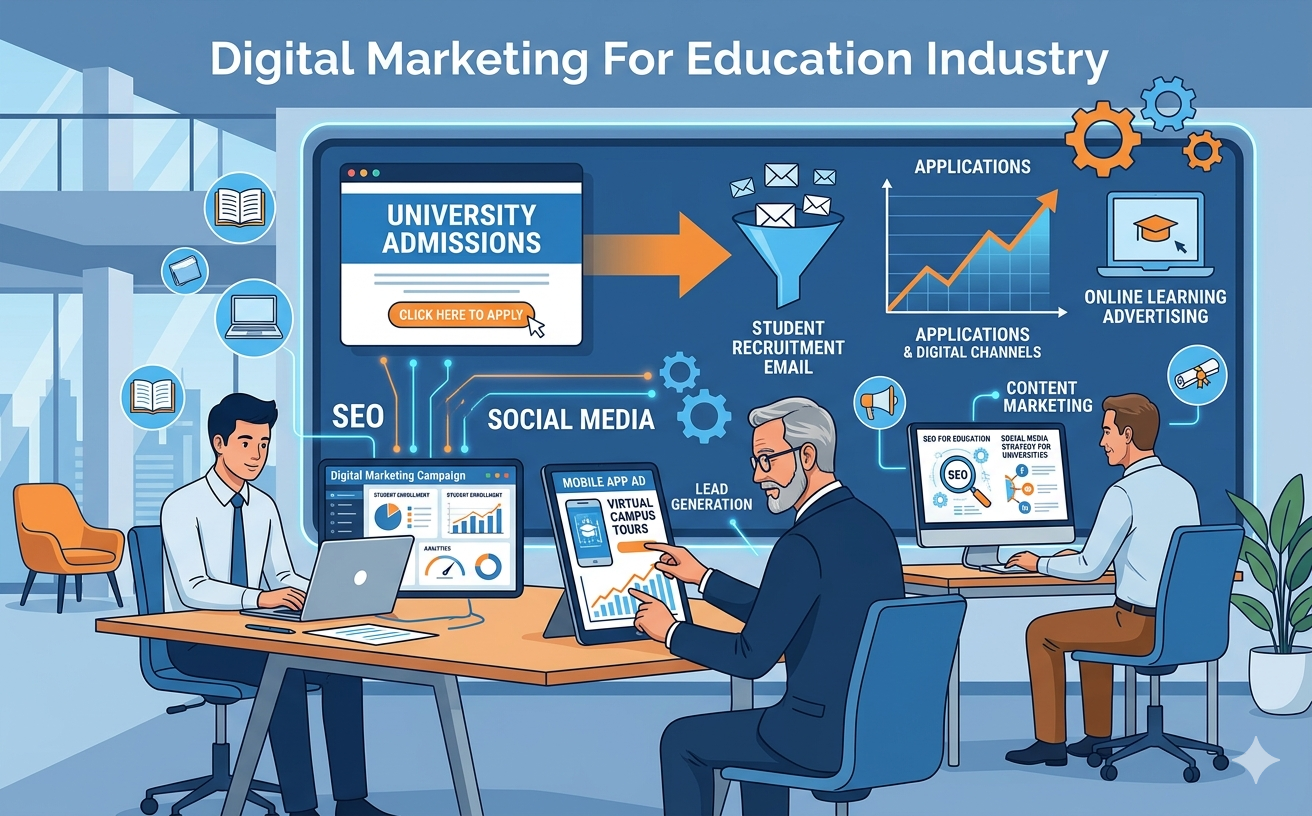
Digital media has become the backbone of education business expansion in the modern era. It enables institutions to reach a wider audience beyond geographical boundaries and showcase their academic offerings effectively. Through websites, social media pages, and online campaigns, education providers can build strong brand awareness and credibility. Students and parents now rely heavily on online information before making admission decisions, which makes digital presence essential. Digital media also allows real-time communication, making it easier for institutions to respond to inquiries and provide guidance instantly. This not only improves trust but also increases conversion rates. Additionally, Digital Marketing For Education Industry help education businesses track user behavior, measure campaign success, and optimize their strategies for better results. Overall, digital media acts as a bridge between education providers and modern learners, driving consistent growth and long-term success.
Expansion of Online Learning Platforms
One of the most significant impacts of digital media is the rise of online learning platforms. Education businesses are no longer restricted to physical campuses; they can now offer virtual classes, webinars, and recorded lectures to students worldwide. This expansion allows institutions to scale their operations without needing additional infrastructure. Online platforms also make education more accessible for students in remote areas who may not have access to quality institutions. Through digital media, education providers can promote their courses, highlight success stories, and attract international learners. This global reach significantly increases enrollment opportunities and revenue streams. Moreover, online platforms provide flexibility in learning, which appeals to working professionals and part-time students. As a result, education businesses can diversify their offerings and grow more sustainably in a competitive market.
Social Media Marketing for Education Businesses
Social media has become one of the most powerful tools for education business growth. Platforms like Facebook, Instagram, LinkedIn, and YouTube allow institutions to connect directly with students and parents. Through engaging posts, live sessions, student testimonials, and campus tours, education providers can create a strong emotional connection with their audience. Social media marketing also helps in building trust and credibility, which are key factors in admission decisions. Paid advertising campaigns on these platforms enable precise targeting based on age, location, and interests, ensuring that the right audience sees the message. Additionally, social media allows institutions to share updates, achievements, and educational content regularly, keeping their audience engaged. This continuous interaction helps in building a loyal community around the institution, ultimately leading to increased admissions and business growth.
Content Marketing and Branding in Education
Content marketing plays a vital role in establishing authority and brand identity in the education sector. High-quality blogs, videos, eBooks, and informational posts help institutions demonstrate their expertise and value. When education businesses consistently publish useful content, they position themselves as thought leaders in their field. This builds trust among students and parents who are searching for reliable educational guidance. Blogging about career opportunities, exam preparation tips, and course benefits can attract organic traffic to websites, increasing visibility without heavy advertising costs. Branding through digital content also helps differentiate one institution from another in a competitive market. A strong brand image encourages long-term relationships with students and improves retention rates. In this way, content marketing becomes a long-term investment that supports sustainable growth.
Data Analytics and Student Insights
Digital media provides powerful data analytics tools that help education businesses understand student behavior and preferences. By analyzing website traffic, social media engagement, and ad performance, institutions can gain valuable insights into what students are looking for. This data allows them to refine their marketing strategies and improve decision-making. For example, if a particular course page receives more visits, institutions can focus on promoting that program further. Analytics also help in identifying the most effective marketing channels, ensuring better return on investment. Additionally, understanding student demographics helps in creating personalized communication strategies, which increases engagement and conversion rates. Data-driven decision-making ensures that education businesses stay competitive and continuously improve their services based on real user behavior.
Digital Advertising and Lead Generation
Digital advertising has transformed how education businesses generate leads and attract students. Platforms like Google Ads and social media ads allow institutions to target specific audiences with precision. Unlike traditional advertising, digital ads are cost-effective and measurable, making them ideal for education marketing. Institutions can run campaigns for admissions, scholarships, and new course launches to attract potential students. Landing pages and lead forms help capture student information, which can be used for follow-up and conversion. Remarketing strategies also ensure that interested users are reminded of the institution repeatedly, increasing the chances of enrollment. With proper planning and optimization, digital advertising becomes a powerful tool for consistent lead generation and business expansion in the education sector.
Improving Student Engagement Through Digital Tools
Student engagement is a critical factor in the success of any education business, and digital tools play a major role in enhancing it. Learning management systems, mobile apps, and interactive platforms allow students to access study materials anytime and anywhere. Live chat support, discussion forums, and online assessments improve communication and participation. Gamification techniques such as quizzes and badges make learning more interactive and enjoyable. Education businesses can also use email marketing and notifications to keep students informed about updates and new opportunities. Engaged students are more likely to complete courses and recommend the institution to others, leading to organic growth. Digital tools therefore not only improve learning outcomes but also strengthen the overall business performance.
Challenges in Using Digital Media in Education Business Growth
Despite its many benefits, using digital media in education business growth comes with certain challenges. One of the main issues is high competition, as many institutions are now using digital platforms to attract students. This makes it difficult to stand out without a strong strategy. Another challenge is the need for continuous content creation and regular updates, which requires time and resources. Additionally, not all target audiences may be equally active online, especially in rural areas where internet access may be limited. Data privacy and security concerns also need to be addressed when handling student information. Education businesses must invest in proper planning, skilled professionals, and reliable tools to overcome these challenges and fully benefit from digital media.
Future of Digital Media in Education Industry
The future of digital media in the education industry looks highly promising. With advancements in artificial intelligence, virtual reality, and personalized learning systems, education businesses will become more interactive and efficient. AI-powered tools will help institutions provide customized learning experiences for students based on their performance and preferences. Virtual classrooms and immersive technologies will make learning more engaging and accessible. Social media and digital platforms will continue to evolve, offering even more precise targeting and communication options. As technology advances, education businesses that adapt quickly to digital trends will gain a strong competitive advantage. The integration of innovation and education will continue to drive business growth and redefine the learning experience.
Conclusion
Digital media has become an essential driver of growth for education businesses in the modern era. It enhances visibility, improves communication, and creates opportunities for global expansion. From social media marketing to online learning platforms and data analytics, every aspect of digital media contributes to stronger engagement and higher admissions. Although challenges exist, the benefits far outweigh the limitations. Education providers that embrace digital strategies can build stronger brands, attract more students, and achieve sustainable long-term growth in an increasingly competitive industry.